If you’re considering an overwater bungalow at an all‑inclusive resort, you’ll want clear expectations about what’s actually included, typical nightly costs, and the travel logistics that can double your budget. This guide cuts through marketing to show room types, package tiers, transfer fees, and hidden charges, plus tips for judging value and timing your trip…
Key Takeaways
- Choose destinations (Maldives, Bora Bora, Fiji, Caribbean, SE Asia) based on accessibility, lagoon depth, reef health, and desired resort vibe.
- Overwater villa types range from basic decks to private pools, glass floors, butler service, and direct lagoon access.
- Expect transfer logistics and fees: seaplanes, domestic flights, speedboats, limited schedules, baggage limits, and conservation levies.
- Pricing tiers vary widely—basic, premium, overwater‑luxe—with inclusions differing; verify transfers, meals, premium drinks, activities, taxes, and resort fees.
- Book shoulder season, compare refundable versus nonrefundable rates, read recent guest photos/reviews, and request written confirmation of all inclusions.
Where to Find Overwater Bungalows: Top Destinations and Island Choices

Where can you find the iconic overwater bungalow?
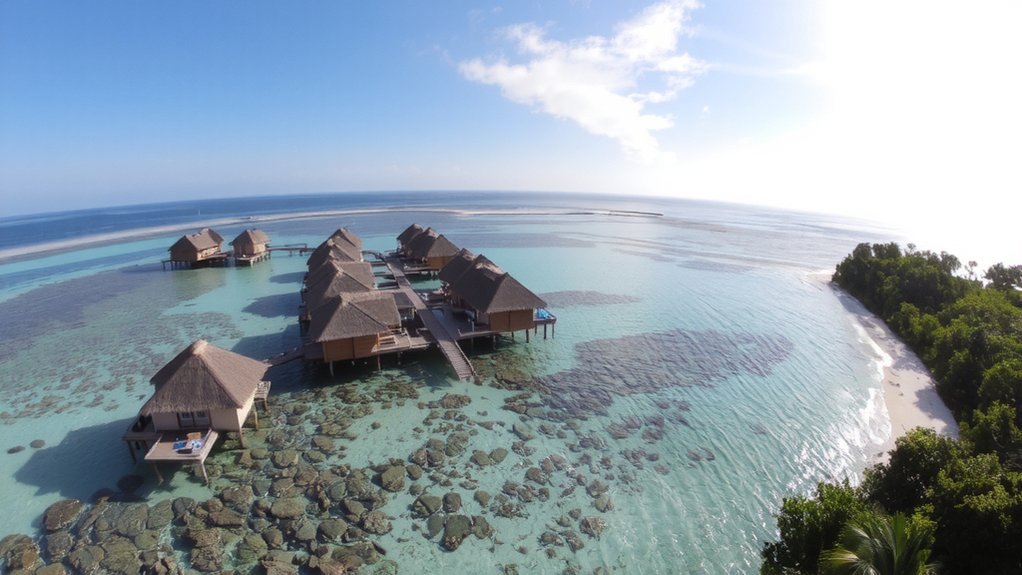
You’ll see them in tropical hotspots: the Maldives, Bora Bora, Tahiti, Fiji and parts of the Caribbean and Southeast Asia.
You’ll research islands for accessibility, lagoon depth and reef health, since Marine Biodiversity affects snorkeling and conservation rules.
You’ll also check Local Regulations about building permits, protected zones and wastewater standards—some islands restrict new construction to preserve ecosystems.
Choose resorts on private atolls or family-run islands for different vibes, but prioritize reef-safe practices and transparent environmental policies.
When planning, consider flight connections, peak seasons and transfer logistics.
That way you’ll pick a destination that balances convenience, conservation and the distinctive overwater experience you want.
Reserve early to secure preferred dates and sustainable resort choices worldwide nearby options.
Types of Overwater Accommodations and Amenities to Expect

You’ll find private overwater villas that give you direct lagoon access and full privacy.
Some units feature swim-up terraces and glass-floor panels so you can watch marine life from your room.
Resorts also offer onsite dining, spa treatments and guest services to keep everything convenient.
Private Overwater Villas
A private overwater villa gives you direct water access, panoramic views, and a level of seclusion few other rooms can match. You’ll find spacious decks, separate living areas, and private staff options in many resorts. Consider ownership models—hotel leaseback or fractional ownership—if you want long-term use. Resorts follow strict environmental regulations; ask how foundations, waste, and energy are managed. Typical amenities include private pools, dedicated butlers, and enhanced security. Expect higher rates and added privacy compared with standard bungalows.
| Feature | Typical Offering |
|---|---|
| Space | 100–300 sqm, private deck |
| Service | Butler, concierge, housekeeping |
| Privacy | Secluded positioning, gated access |
Book early for limited inventory; summit-season and sunset-facing villas fill fast. Additional fees for transfers, island conservation levies, and private excursions often apply. Compare package inclusions carefully, always.
Swim-Up & Glass Floors
Enjoying direct water access and uninterrupted sea views, swim-up villas and suites with glass floors blend convenience with spectacle—you can slip from your deck into the lagoon or watch reef life below without leaving your room.
You’ll find sliding doors, ladders, and submerged steps designed for easy entry and private sunning.
Glass-floor panels give constant underwater views but can collect salt and require regular cleaning.
Ask about Safety Considerations like railing heights, non-slip decking, and child access controls before booking.
Also inquire how resorts handle Structural Maintenance: pile inspections, waterproof seals, and corrosion control.
Knowing cleaning schedules, emergency procedures, and maintenance routines helps keep your stay stays scenic and secure. Confirm documented inspections and always ask for recent reports to avoid surprises and maintain accountability.
Onsite Dining & Services
Often resorts group dining and services to match bungalow styles, so you’ll find everything from overwater fine‑dining restaurants and seafood grills to casual beach bars, 24/7 room service, and private, chef‑prepared meals on your deck.
You can expect afternoon tastings, Chef Showcases spotlighting local flavors, and themed buffets tailored to families or couples.
Staff will coordinate in-room spa menus, water-sport rentals, and grocery or minibar preferences before arrival.
Many resorts promote Sustainable Sourcing for fish and produce; ask about seasonal menus and farm partnerships.
Concierge teams arrange sunset cruises, private dining on sandbanks, and dietary accommodations.
Check which options are included versus a la carte, and verify service hours, gratuity policies, and any extra fees so you won’t face surprises. Plan accordingly for bookings.
How All-Inclusive Packages Differ: What’s Usually Included
Because resorts tailor all-inclusive plans to different travelers, what you get can vary widely—from basic meals and drinks to unlimited activities, transfers, and spa credits. You should check inclusions so you’re not surprised: some packages cover gourmet dining, local drinks, and Inclusive Excursions, while others limit premium restaurants or alcohol brands.
Also review Gratuity Policies—tips may be included, suggested, or expected. Look for transfer service, kids’ clubs, non-motorized water sports, and spa credits.
Choose the plan that matches your priorities: romance, family fun, or adventure.
- Dining tiers and beverage lists
- Transfers and shore excursions
- Spa credits, kids’ clubs, activity access
If you’re uncertain, contact the resort or your agent for a detailed inclusions list and written confirmation before booking, and note blackout dates too.
Pricing Tiers, Seasonal Rates, and Typical Nightly Costs

Many resorts offer tiered pricing—basic, premium, and overwater-luxe—so you can pick a level that matches amenities and privacy.




You’ll find base nightly rates that rise with size, view, private deck, and included extras like in-room dining or excursions.
Seasonal rates spike during holidays and high season; shoulder-season deals can cut costs substantially.
Expect typical nightly costs to range widely—budget overwater rooms start lower, while overwater-luxe suites command premium prices.
Be aware resorts use dynamic pricing, so booking early or monitoring rates can save you money.
Also factor in taxes, resort fees, and possible currency fluctuations if you pay in a foreign currency.
Compare packages, check cancellation flexibility, and lock dates when you see a fair rate.
Consider travel insurance for changes or rate shifts.
Transfer Logistics and Additional Transportation Expenses

If your resort sits on a remote atoll, plan how you’ll get there: transfers can include domestic flights, seaplanes, or speedboats and add substantially to your total cost and travel time. You’ll coordinate arrival windows, check Seaplane schedules, and factor in layovers; transfers often run only a few times daily.
Ask the resort about included transfers, meet-and-greet services, and whether private boats are available. Watch for Luggage surcharges and strict baggage limits — oversized bags may incur fees or delay connections.
Consider travel insurance that covers missed transfers. Balance convenience against extra cost when choosing arrival times and carriers.
- Confirm transfer times, connection buffers, and booking cutoffs.
- Ask about baggage limits, Luggage surcharges, and oversized fees.
- Check alternate options like speedboat or seaplane timing.
Resort Quality, Reviews, and How to Evaluate Value
You’re better off comparing official star ratings with recent guest reviews to spot gaps between reputation and reality.
Check what amenities are actually included—meals, transfers, and spa credits are often extra—and don’t assume every perk advertised is part of the package.
Read recent comments for consistent praise or complaints so you’ll know whether the price matches the real value.
Ratings Vs Reality
How do ratings line up with what you’ll actually experience? Ratings give a snapshot, but you should probe beyond scores.
Check recent reviews for consistency, watch for clusters of similar language indicating PR or Influencer Marketing, and compare guest photos to official images to judge Photo Authenticity.
Look for terse, specific comments about maintenance, noise, service, and transfer times.
- Verify dates and reviewer profiles for repeat patterns.
- Contrast guest photos with resort galleries to spot staging.
- Favor balanced reviews that note negatives and positives.
Use skepticism: high ratings with generic praise can mask problems, while a few critical notes often reflect isolated incidents.
You’ll make better choices by triangulating multiple sources. Always. Period.
Amenities and Inclusions
When comparing resorts, focus on what’s actually included versus what you’ll pay extra for: transfers, meals or meal plans, minibar and alcohol, nonmotorized water sports, reef access, Wi‑Fi, taxes and service fees, and any resort credits or activity packages.
Evaluate resort quality by reading recent reviews for cleanliness, staff responsiveness, and how accurately descriptions match reality.
Check if rates bundle excursions, spa credits, or dining upgrades so you can compare apples to apples.
Consider sustainability practices—waste reduction, reef protection, and local hiring—since they affect long‑term value and guest experience.
Note tech integrations like mobile check‑in, digital room controls, and reliable Wi‑Fi that streamline stays.
Tally inclusions against extras to decide true value.
Also verify cancellation policies and small-print fees before you finalize booking today.
Hidden Fees, Resort Policies, and Extra Charges to Watch For
Why do idyllic overwater bungalows often cost more than the posted rate? Because resorts add mandatory resort fees, explain Credit Holds on incidentals, and enforce strict Cancellation Penalties that can inflate your bill.
You should review the fine print before booking: nightly taxes, service charges, and mandatory transfers are common.
Also confirm what “all-inclusive” covers—spa treatments, premium alcohol, excursions, and private dining often carry extra fees.
- Check for resort or handling fees, airport transfers, and port taxes.
- Ask about Credit Holds for incidentals, preauthorization amounts, and release timelines.
- Confirm Cancellation Penalties, refund windows, and travel insurance requirements.
Inspect nightly folio on checkout, request itemized bills, and dispute unexpected charges promptly.
Small extras add up quickly, so plan a buffer in your budget right away.
Booking Strategies, Best Times to Travel, and Insider Tips
Where you book and when you go can shave hundreds off an overwater bungalow stay: book shoulder season or midweek stays for lower rates and calmer crowds, join resort mailing lists and loyalty programs for promos or upgrades, and watch for package deals that include transfers and activities to avoid hidden add‑ons.
You’ll save more by comparing refundable and nonrefundable rates, booking directly to access resort-only perks, and calling to ask about Last minute upgrades they sometimes appear within 48 to 72 hours.
Use Loyalty hacks: consolidate stays with one brand, credit resort credits to free experiences, and stack promos with third-party site coupons.
Pack essentials to avoid pricey resort shops, confirm airport transfers, and get confirmation numbers, so arrival stays smooth and stress-free.
Conclusion
By choosing overwater bungalows at all inclusive resorts, you’ll enjoy private water access, curated service, and bundled activities, but you’ll also need to verify transfers, blackout dates, baggage limits, and hidden fees. Compare package tiers, seasonal rates, and guest reviews for maintenance and noise, and confirm cancellation and tipping policies. Book off peak when possible, use package comparisons, and ask resorts directly about levies and excursions so you’ll get the best value and avoid surprises.