You can snag steep discounts at all‑inclusive resorts in hurricane season, but you’re trading price for uncertainty. Storms peak in August–October, forecasts shift fast, and resort policies vary widely. If you value flexibility, a cheap prepaid rate can cost you more in stress. You’ll want to know which risks are worth the savings…
Key Takeaways
- Hurricane season runs June 1–Nov 30, with peak risk August–October—monitor forecasts closely before booking.
- Lower prices often mean nonrefundable rates or blackout-date restrictions on promotions and loyalty redemptions.
- Choose refundable rates or buy hurricane-capable travel insurance covering cancellation, interruption, and evacuation.
- Set a firm decision deadline tied to forecast updates and resort cancellation windows to avoid last-minute losses.
- Weigh monetary savings against potential closures, evacuations, and stress; prioritize flexibility if travel companions or medical needs exist.
Understanding Hurricane Season Timing and Risks

Although hurricane season runs from June 1 to November 30 in the Atlantic, peak activity usually hits between August and October, so you’ll want to pay extra attention during those months.
You should monitor seasonal patterns to understand when storms are more likely and which islands face higher risk, and use official forecasts rather than social media.
Check forecast accuracy over recent years for agencies you trust, and track cone projections, wind speeds, and storm surge estimates.
Plan flexible travel dates and refundable bookings, identify evacuation routes at your resort, and keep emergency kits ready.
Stay alert to watches and warnings, follow local authorities, and don’t assume a storm will miss you; conditions can change fast. You’ll also review insurance details before you travel.
How Resorts Price and Promote Deals During Storm Months

You’ll notice resorts shift to dynamic pricing during hurricane season, lowering rates on calmer weeks and raising them when forecasts stabilize.
They’ll roll out targeted promotions like last-minute deals and bundled perks to move inventory quickly.
At the same time, many properties enforce promotional blackout dates around peak storm warnings or major holidays, so you should check the fine print before booking.
Dynamic Pricing Strategies
When storm season approaches, resorts shift into a flexible pricing mode that balances occupancy goals with weather risk, so you’ll often see deeper discounts, last-minute promos, and refundable rates designed to reassure hesitant travelers.
You’ll notice surge pricing during sudden demand spikes—like a competitor’s closure—while demand forecasting models adjust rates daily to reflect forecasted cancellations and booking pace.
You can often lock lower rates with refundable or rebookable options, and resorts will promote short-window deals to fill rooms while protecting revenue. Read cancellation terms closely and compare package components, since lower prices can omit extras. Use alerts and flexible search dates to catch genuine bargains rather than reactive fire-sale rates that carry higher operational risk. Trust seasoned reviews to vet resort storm policies ahead.
Promotional Blackout Dates
How do blackout dates work during storm season, and why do resorts use them?
You’ll find resorts block peak-risk days from promos to protect revenues and staffing; blackout dates stop deep discounts when occupancy or cancellation risk spikes.
During hurricane season, marketing teams balance visible deals with safety messaging, offering limited-time rates but excluding vulnerable dates.
Vendor Partnerships influence which dates get protected—suppliers may restrict availability for transport or excursions, so resorts can’t guarantee full packages.
Also expect Loyalty Exclusions: elite members mightn’t get discounted stays on blackout dates, or points redemptions may be limited.
When booking, check blackout calendars, ask about refund policies, and compare vendor rules so you’re not surprised by hidden restrictions.
Plan backups and travel insurance to mitigate losses.
What to Check in Cancellation, Rebooking, and Refund Policies
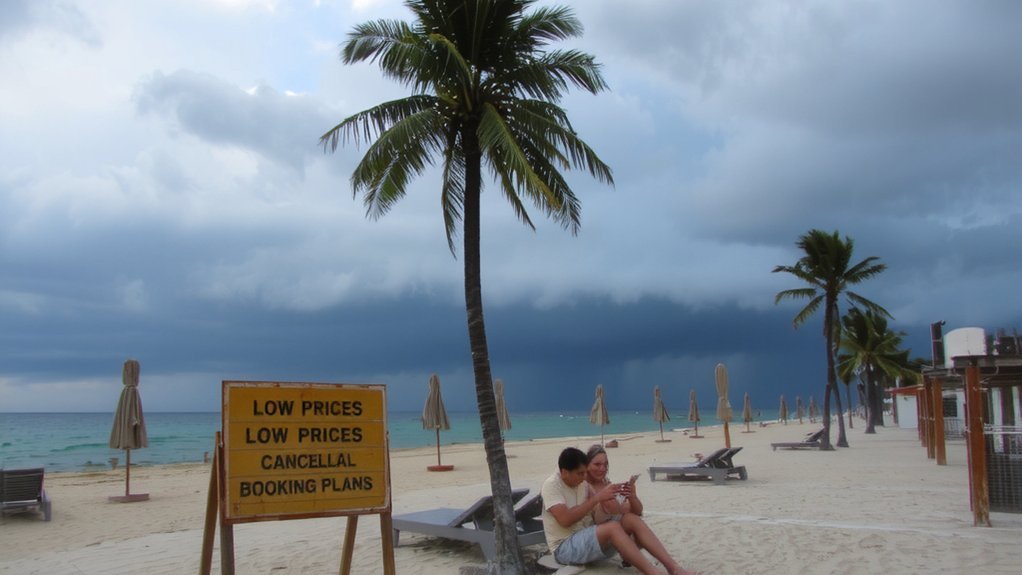
Because storms can force sudden changes, review your resort’s cancellation, rebooking, and refund terms before you book.
Check documentation requirements, processing timelines, and how the resort defines force majeure so you know what’s covered.
Confirm who pays rebooking fees and whether credits have expiration dates.
Note if waivers apply only to government advisories or to local closures.
- Eligible cancellation windows and penalties
- Rebooking options and associated fees
- Refund methods, timelines, and hold periods
- Required proof, claim forms, and who to contact
Keep written records of emails and receipts, and ask for clear timelines for any promised credits or refunds.
If terms seem vague, get clarifications in writing and consider booking flexible-rate rooms or refundable add-ons to protect your trip investment before final payment deadline.
Travel Insurance Options and Hurricane-Related Coverage

You should compare trip cancellation and trip interruption policies to know whether you’re covered if you cancel before travel or have to cut your trip short because of a storm.
Make sure evacuation expenses and emergency medical coverage are included, since resort evacuations and overseas treatment can be costly.



Check policy triggers, time limits, and required documentation so you’ll be ready if a hurricane affects your plans.
Trip Cancellation Vs Interruption
When a hurricane looms, trip cancellation and trip interruption policies protect different parts of your travel investment, so you’ll want to know which one you’re buying.
You should understand legal distinctions and Emotional impacts: cancellation covers pre-departure losses if you can’t go for covered reasons; interruption reimburses unused trip portions and return costs if your trip ends early.
Check policy definitions, covered reasons, and proof required.
Consider blackout dates, weather clauses, and force majeure exclusions.
- Trip cancellation: refunds prepaid nonrefundable costs before travel.
- Trip interruption: reimburses missed land or lodging and extra transport.
- Covered reasons: vary; read the policy list closely.
- Documentation: you’ll need receipts, provider statements, and timing proof.
Don’t assume hurricane forecasts alone will trigger coverage; study terms.
Evacuation and Medical Coverage
If a resort orders an evacuation or you need urgent care, your policy’s emergency evacuation and medical sections dictate what gets paid and how fast help arrives.
You should check limits for air or ground transport, hospital stays and ambulance fees, and whether the insurer pre-approves transfers off the island.
Verify coverage for care at Onsite Clinics and whether remote facilities are considered in-network.
Confirm how policies coordinate with resort evacuation plans and published Evacuation Routes — insurers may require you to follow official orders.
Carry your insurer’s emergency contact, policy number and a copy of IDs.
If you have preexisting conditions, get a waiver or supplemental coverage so treatment and evacuation aren’t denied when storms hit.
Read exclusions carefully before you travel abroad.
Practical Steps to Prepare for Travel Disruptions

Before a storm threatens your trip, make a short checklist: buy trip insurance that covers hurricanes, choose refundable or changeable flights and rooms, photocopy IDs and itineraries, save emergency contacts and local embassy info, and pack a small go-bag with medications, chargers, and a flashlight.
Also create digital backups of documents and confirm pet arrangements before you go.
Stay alert to advisories, and know refund and evacuation policies.
- Keep your phone charged and carry a portable battery.
- Register with your embassy and share plans with family.
- Check the hotel policy for on-site shelter and transportation.
- Keep cash, a local SIM card, and printed maps.
If plans change, don’t delay: contact providers immediately and document communications.
Pack masks and basic first aid items, stay flexible.
Timing Your Booking: When to Commit or Hold off
Because hurricane forecasts improve as the storm season progresses, you should balance the cost savings of booking early against the flexibility of refundable fares and insurance, especially from August through October when risks peak.
Decide based on your tolerance for change: if your school calendars or peak work periods lock you into dates, booking earlier with flexible cancellation can save money and headaches.
If you can shift dates or have strong work flexibility, consider waiting for clearer forecasts and last-minute deals.
Use refundable rates when trips fall during uncertain months, and confirm insurer hurricane clauses.
Track forecasts and set firm decision deadlines tied to your personal commitments, so you won’t scramble if conditions change.
Don’t forget to compare concierge rebooking assistance and resort policies.
Weighing Savings Against Stress, Safety, and Flexibility
While a flash sale can shave hundreds off your trip, you should weigh that immediate savings against the stress, safety concerns, and lost flexibility it can bring—nonrefundable fares, limited rebooking options, and crowded evacuation logistics can turn a bargain into a headache.
You’ll ask whether cheaper rates justify potential disruption: last-minute closures, delayed flights, and uncertain staffing.
Consider emotional cost and possible relationship strain if plans collapse.
Use this checklist to decide:
- Cancellation policy strictness and travel insurance coverage
- Resort evacuation record and local emergency infrastructure
- Alternative dates, credits, and rebooking ease
- How stress might affect your travel companion(s)
Decide based on risk tolerance, not just price.
If you need guarantees, pay more; if you accept uncertainty, book smart and pack patience.
Today too.
Conclusion
If you’re chasing lower rates during hurricane season, weigh savings against possible disruption and stress. Choose refundable rates or strong travel insurance, confirm resort blackout dates and rebooking terms, and set a firm decision deadline tied to forecasts. If you value flexibility and peace of mind, pay more for refundable options rather than gambling on last‑minute deals. Ultimately, pick the option that keeps you safe, rested, and able to enjoy your trip without any regret.