You want to know the real cost of an all‑inclusive resort in 2025. You’ll see typical nightly ranges by region, how seasonality and upgrades inflate prices, and which extras often aren’t covered so you don’t get surprised. Start with the nightly rates, then compare the fine print to protect your budget.
Key Takeaways
- Typical nightly rates vary by region: budget $80–$150, mid‑range $120–$400, luxury $600+ depending on destination and season.
- Seasonality multiplies rates: peak 1.5–2.0x, holidays 1.8–2.5x, low season 0.6–0.9x; book shoulder for best value.
- Expect hidden fees: resort fees, taxes, spa/excursion charges, premium dining, minibar and parking often excluded from base price.
- Open-bar limits: house brands and basic cocktails usually included; top‑shelf spirits, craft cocktails, and room service commonly cost extra.
- Save money by requesting itemized contract inclusions, comparing shoulder‑season dates, using loyalty perks, and confirming blackout or minimum‑stay rules.
What All-Inclusive Actually Covers
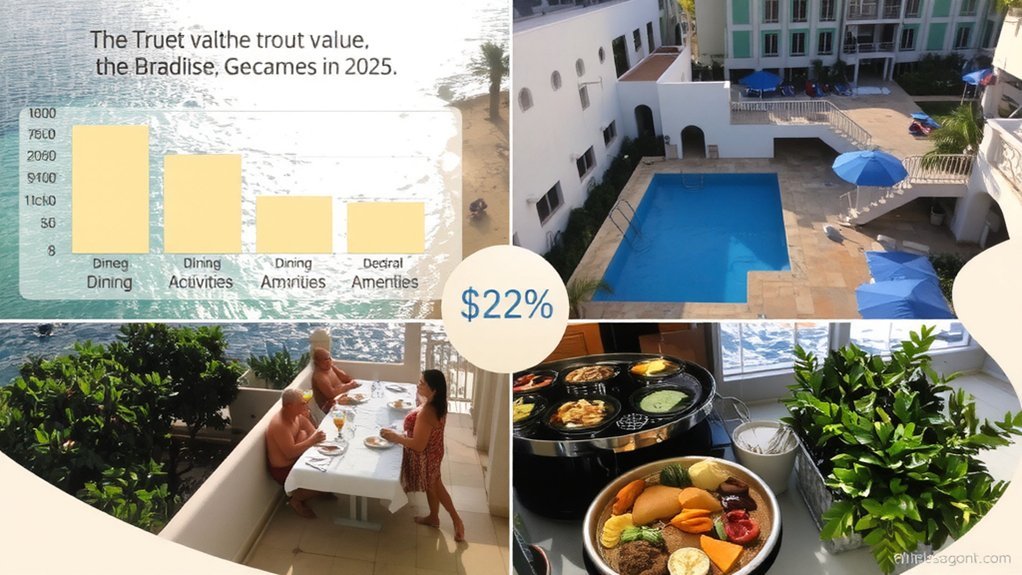
What does “all-inclusive” really cover? You get lodging, most meals, basic drinks, select activities and entertainment bundled into one price, but offerings vary.
Check Environmental policies to see if sustainable practices, waste reduction or local sourcing are included.
Verify Contract transparency: know what’s truly covered, blackout dates, resort fees, and extra charges for premium dining, spa services, excursions, or off-site activities.
You’ll want written details on gratuities, room upgrades, minibar use, Wi‑Fi tiers, and transportation.
Ask about children’s programs and inclusions for specialty events.
Reading the fine print helps you avoid surprise costs and compare resorts accurately, so you choose the package that fits your priorities and budget. Request itemized quotes and confirmations before booking to protect your wallet and peace of mind now.
Typical Nightly Rates by Destination
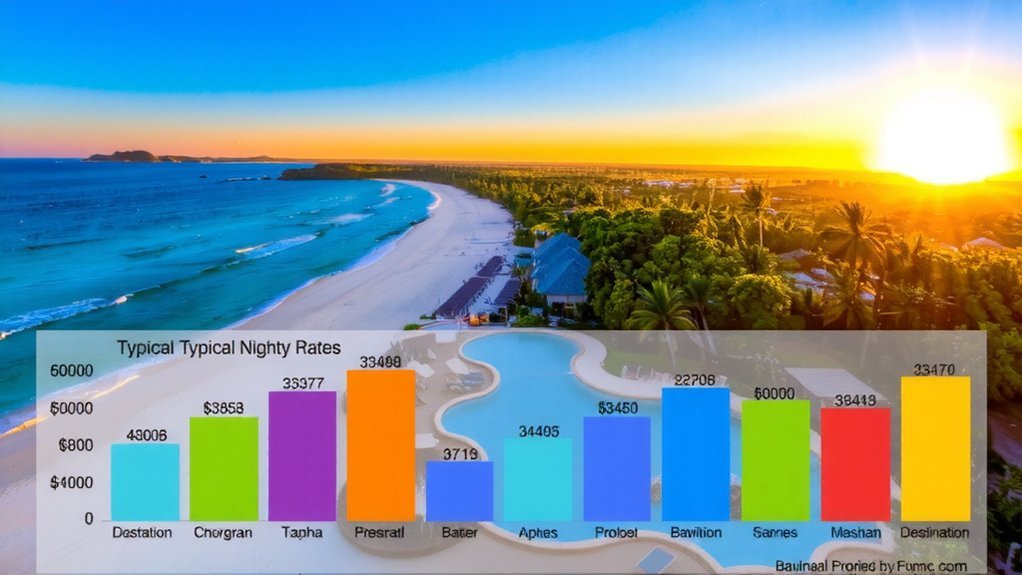
Now that you know what an all-inclusive package can cover, you’ll want to compare how prices vary by destination.
You’ll find Caribbean beach resorts often start around $150–$400 per night for midrange properties, while luxury stays climb well above $600.
Mexico and Central America commonly offer strong value: many mid-tier resorts fall between $120–$300.
European all-inclusives, especially on Mediterranean islands, trend higher, often $200–$500.
Regional comparisons show Caribbean and Mexico typically undercut Europe and boutique urban resorts.
Speaking of cities, expect Urban premiums in capital or tourist-heavy downtown locations—city-based all-inclusives can add $50–$200 nightly compared with nearby coastal options.
Use price brackets to set expectations and focus on amenities you care about when choosing between regions. Don’t forget to check included activities and transport.
How Seasonality Affects Prices

You’ll pay far more in peak season when demand spikes, while low season often brings much lower nightly rates.
Shoulder seasons usually offer predictable discounts and better availability if you’re flexible.
Holidays and local events can push prices up sharply, so you should book early or shift dates to avoid premiums.
Peak vs. Low Season
Although resorts keep published base rates year-round, you’ll pay substantially more during peak season when demand and occupancy surge. You can expect higher rates during holidays and school breaks; operators raise prices to match demand, boost staffing and schedule resort maintenance in low season. Weather contrasts drive timing: tropical highs and dry months attract crowds, while rainy seasons lower rates. Use the table below to compare typical price multipliers.
| Season | Typical Price Multiplier |
|---|---|
| Peak | 1.5–2.0x |
| Holiday | 1.8–2.5x |
| Low | 0.7–0.9x |
| Off-peak | 0.6–0.8x |
Book early for peak dates or opt for low-season weeks to save. Flexibility on dates and room type can cut costs; loyalty perks and package deals sometimes trim another 10–25% off peak prices. Compare multiple resorts and set fare alerts to maximize savings.
Shoulder Season Discounts
When peak demand eases into slower months, shoulder seasons give you meaningful savings — you can often grab rates 10–40% below peak as resorts lower prices to boost occupancy while avoiding the deep cuts of low season.
You’ll find fewer crowds, more flexible booking terms, and chances to upgrade without hefty fees.
Expect some trade-offs: weather variability can mean warmer mornings and sudden showers, so pack layers and plan outdoor activities with backups.
Resorts also schedule renovations or limited services around these periods, so check maintenance schedules and confirm pools, restaurants, and spas will be open. Book refundable rates and monitor price drops — you can rebook if a better deal appears and save substantially. Travel midweek when possible to maximize these shoulder season bargains.
Holiday and Event Premiums
Because demand spikes around holidays and big events, resorts raise base rates, tack on resort fees, and often require longer minimum stays so they can maximize revenue from willing guests.
You’ll pay clear premiums during peak dates: Event markups inflate room rates, add exclusive packages, and sometimes force Blackout pricing that blocks discounted inventory.
To plan, check policies and book early; flexibility saves money.
Consider these tips:
- Compare per-night rates including resort fees.
- Watch for package deals versus à la carte upgrades.
- Aim for arrivals outside main event windows.
- Ask about negotiated group or loyalty rates.
You’ll avoid surprises by confirming all surcharges before you commit.
If you’re flexible on dates, you can often shift by a day or two to save substantially today.
Comparing Budget, Mid-Range, and Luxury Properties
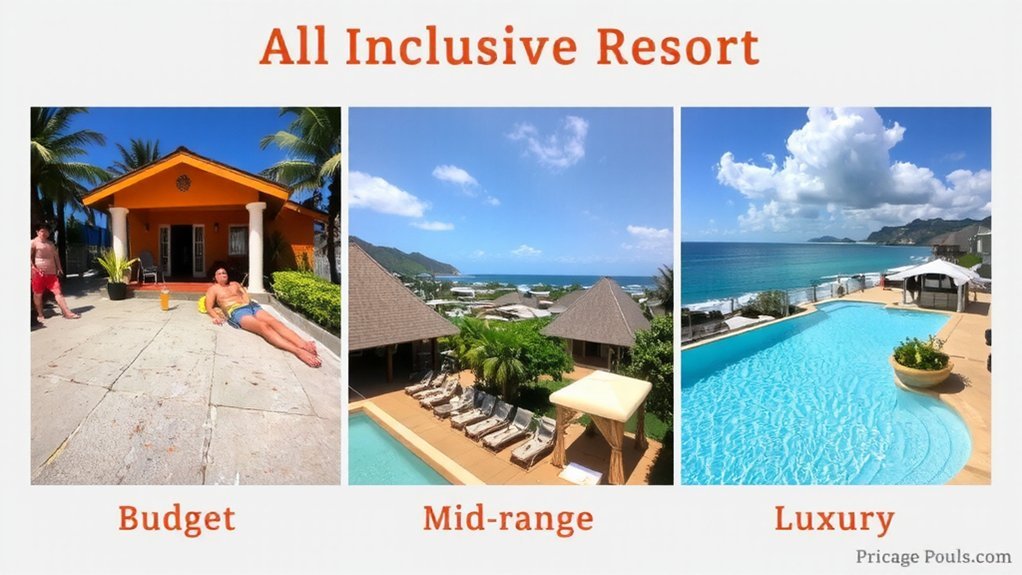
How do budget, mid-range, and luxury all-inclusive resorts actually differ, and which trade-offs will matter most to you?
You’ll find budget options focus on essentials: simple rooms, limited dining choices, and basic activities, so you’ll pay less but accept fewer perks.
Mid-range resorts balance price and comfort with varied restaurants, better pools, and more organized entertainment; check Brand Reputation to gauge consistency.
Luxury properties deliver spacious suites, gourmet cuisine, bespoke experiences, and extensive wellness facilities, though rates rise accordingly.
Also compare location, service levels, room size, and included activities.
Ask about Sustainability Practices if that’s important—some properties invest in local sourcing and conservation, while others do little.
Decide which amenities you value most and pick the category that matches your priorities and budget today.
Hidden Fees and Extra Charges to Watch For

Although resorts advertise “all‑inclusive,” you’ll still encounter add‑ons that can blow your budget if you don’t watch for them.
Read the fine print for resort fees, activity surcharges, and mandatory taxes that aren’t bundled into the room rate.
You’ll also see charges for special requests and conveniences.
- Spa treatments and excursions often carry separate fees.
- Premium dining or themed events may require a cover or reservation charge.
- Pet fees can add up quickly if you bring animals.
- Valet or parking fees aren’t always included in the advertised price.
Check final invoices before checkout, ask for an itemized bill, and confirm what’s actually covered to avoid surprises.
If you’re unsure, call ahead and get written confirmation about inclusions and any potential incidental charges beforehand.
Beverage Policies: From Open Bar to Premium Brands



You’ll first want to understand the open bar basics—what’s included, what’s served, and any time or venue limits.
Then check whether premium brand access is included in your package or requires an upgrade.
Finally, watch for specialty drink charges like craft cocktails or bottles that can add unexpected costs.
Open Bar Basics
Curious what an “open bar” actually covers at an all-inclusive?
You’ll usually get a range of house spirits, draft beers, basic cocktails and nonalcoholic options; resorts emphasize server training and safety protocols to manage consumption and ID checks.
Policies vary, so check specifics before you go.
- House spirits and mixers
- Local beers and wines
- Standard cocktails and mocktails
- Hours of service and venue limits
Expect quality and selection to match your plan tier; bartenders won’t serve beyond policy, and you should respect limits for your safety and others’.
If you want extras like specialty cocktails, top-shelf bottles or room-service drinks, those often carry upcharges or require a premium upgrade, so factor that into your budget and ask the resort about blackout days, event restrictions
Premium Brand Access
If you want top-shelf spirits or imported wines, know many resorts separate those from the standard open bar and charge either a la carte or via a premium package upgrade.
When you compare options, look beyond labels: resorts with designer partnerships often feature exclusive bottles or limited runs, and that can meaningfully raise package prices.
You’ll pay more for brand prestige, but you’ll also get consistent quality and staff trained to serve those expressions.
Ask if upgrades cover all venues, pool bars, and room mini‑bars, and whether corkage or in‑room pours are included.
Negotiate or wait for promotions—seasonal packages sometimes bundle premium access at a lower incremental cost.
Check reviews and request a written list of covered brands before you commit to avoid surprises.
Specialty Drink Charges
While many all‑inclusive packages advertise an “open bar,” resorts often draw a clear line between standard drinks and specialty pours, and you should know where that line falls before you book.
You’ll often get house liquors, beer and basic cocktails included, while craft cocktails, aged spirits, imported wines and signature mixes can carry extra fees. Resorts set those fees based on cost accounting and desired profit margins, so ask which brands and mixes are excluded.
To decide whether an upgrade is worth it, check:
- Which brands are included versus premium
- Prices for single specialty drinks
- Availability of premium packages or wristbands
- Any limits on serving sizes or locations
Compare the upgrade cost to typical bar pricing to avoid surprises today.
Activities, Excursions, and Additional Costs
Although many resorts advertise “all‑inclusive,” you’ll often pay extra for certain activities and excursions, so check what’s covered before you book.
You should review the activity list: guided tours, scuba diving, zip‑lining and off‑site excursions frequently cost extra.
Look for line‑item fees for Equipment Rentals like snorkeling sets, kayaks, and paddleboards; sometimes they’re bundled, sometimes not.
Also confirm cancellation rules and whether your package includes Insurance Options for adventure activities — if not, factor in travel or activity-specific insurance.
Ask about transportation to off‑site locations, age or weight restrictions, and group minimums.
Finally, compare third‑party excursion providers versus resort rates; independent operators can be cheaper, but verify safety records and included gear.
If you have medical needs, pack prescriptions and request accessible equipment ahead.
Gratuity and Tipping Expectations in 2025
Many all-inclusive resorts add standard service charges to your bill, but policies and what’s covered can vary, so check before you go.
You should still tip staff for direct service—housekeeping daily, bartenders after rounds, spa and tour guides after your service—and don’t assume every gratuity is included.
Expect typical amounts like $1–5 per day for housekeeping, $1–3 per drink or $5–10 per bartender/server session, and $5–20 for spa therapists or tour guides depending on service level.
Standard Service Charges
Most all-inclusive resorts add a standard service charge that covers basic gratuities, but you’ll want to know exactly what it pays for and when extra tipping is customary. You should ask for allocation transparency so you see how charges are split; resorts should show revenue accounting for service pools versus individual pay.
That clarity helps you judge value and decide if you’ll supplement staff. Standard charges typically range 10–18% of room rate or are a flat per-stay fee.
- Front desk and concierge basics
- Housekeeping rotation and linen service
- Buffet and bar service maintenance
- Resort amenity upkeep and gratuity pool
If you’re unclear, request a breakdown before booking. Knowing the charge structure prevents surprises and helps you compare true costs across resorts before you book.
When to Tip Staff
When should you tip staff at an all‑inclusive resort in 2025? You’ll follow visible cues and respect cultural timing — not just automatic charges. Tip after standout interactions and at key service milestones: luggage help, special requests, or exceptional attention. Carry small bills for spontaneous gratitude, and hand them personally when the exchange feels natural. Use the table below to match moments and approach.
| Moment | Cue | Action |
|---|---|---|
| Arrival | Porter assists | Tip then or at departure |
| Dining | Personal server | Thank and tip after multi-course service |
| Housekeeping | Turn-down or special request | Leave a note and tip during stay |
Watch staff reactions; if they refuse, respect that. You’ll balance courtesy with resort policies. Plan tipping moments ahead so you’re prepared without interrupting experiences or feeling awkward later.
Tipping Amounts by Role
A quick guide to tipping amounts by role in 2025 will help you budget and avoid awkwardness: you’ll see typical ranges for porters, servers, housekeeping, bartenders, spa therapists, concierges and drivers, plus notes on when to give more for exceptional service or less when gratuity’s included.
Use this baseline—adjust by country, resort policy, and whether gratuity’s included.
- Porters: $1–3 per bag
- Servers: $2–5 per meal or 10–20% if no service charge
- Housekeeping: $2–5 per day; Bartenders: $1–2 per drink
- Spa: 15–20%; Concierge/Drivers: $5–20 per request/trip
If boutique vendors or third party vendors handle activities, tip them directly.
Carry small bills and tip daily.
Confirm tips are acceptable at your resort, use envelopes for housekeeping when appropriate, and thank staff for personalized care always.
Family Vs Adults-Only: Cost Differences and Perks
Although family resorts pack in kids’ clubs, waterslides, and childcare, you’ll often pay more for larger rooms and extra activity fees. You get amenities geared to kids — supervised Childcare Services, family dining, and entertainment — which raise per-person rates and sometimes require paid add-ons for specialized programs.
Adults-only properties charge a premium for quiet, higher Privacy Levels, and upscale inclusions like specialty dining, wellness classes, and boutique bars. You’ll likely pay less for shared experiences at family resorts when kids occupy kids’ clubs, but adults-only stays deliver calmer evenings and fewer hidden charges tied to child-focused extras.
Consider room size, dining policies, and included activities when comparing total costs and what each resort prioritizes. Decide whether atmosphere or kid amenities better suit you.
Money-Saving Tips and Booking Strategies
Choosing between family and adults-only resorts shapes how you hunt for savings and book smarter. You’ll compare peak vs shoulder seasons, use loyalty programs, and pick flexible payment plans to lock rates without overpaying.
Book midweek stays, bundle flights through the resort, and ask about room upgrades or resort credits. Before you finalize, confirm what’s included to avoid surprise fees.
- Book early for best room selection and transferable rates.
- Use loyalty programs or card perks to add free nights or upgrades.
- Choose flexible payment plans to spread cost and protect deposits.
- Travel shoulder season and ask about last-minute discounts or negotiated extras.
Compare package details across resorts, read reviews, and call resorts directly to negotiate group rates or special offers.
Conclusion
You’ll get the best value when you’ll confirm exactly what’s included, compare nightly ranges for your destination and season, and factor in extras like resort fees, premium drinks, excursions, transfers, and gratuities. Pick refundable or loyalty‑friendly bookings, shop third‑party excursion prices, consider adults‑only or family perks, and time travel for shoulder seasons. By asking for itemized inclusions and planning ahead, you’ll avoid surprises and stretch your all‑inclusive budget further without sacrificing comfort, service, or experiences.